

A hydraulic system can have a powerful pump, high-quality hoses, and carefully designed controls, yet a small connection problem can bring the entire operation to a halt. Leaks, pressure loss, and unexpected equipment downtime often begin at points where hoses connect to other components.
That is why choosing the right fittings matters just as much as selecting the hose itself.
Hydraulic connections are essential in construction machinery, agricultural equipment, manufacturing plants, mining operations, and industrial automation. They help transfer pressurised hydraulic fluid safely between pumps, valves, cylinders, and other system components.
For maintenance teams and equipment manufacturers, understanding fitting materials, connection designs, pressure requirements, and installation methods can prevent expensive problems.
This guide explains the main types of hydraulic connections, how to select suitable components, and what to consider when purchasing products from industrial suppliers such as Uberse.
Understanding Hydraulic Hose Connections
Hydraulic hose connections join flexible hoses to rigid pipes, pumps, valves, cylinders, and other equipment. Their primary purpose is to maintain a secure, leak-resistant connection while allowing hydraulic fluid to move through the system under pressure.
Unlike ordinary plumbing connections, hydraulic components must withstand demanding operating conditions. These can include pressure fluctuations, vibration, temperature changes, mechanical movement, and exposure to industrial fluids.
Choosing correctly specified hydraulic hose fittings helps maintain system integrity and reduces the risk of fluid leakage, premature hose failure, and unexpected maintenance.
A properly selected connection must match the hose’s dimensions, pressure rating, material requirements, and connection standard. Even a small mismatch can compromise sealing performance.
Common Types of Hydraulic Hose Fittings
Different hydraulic systems require different connection designs. Understanding the main options makes selecting replacement parts or designing new assemblies easier.
1. Straight Fittings
Straight fittings connect hoses to components without changing the direction of the fluid pathway.
They are commonly used in equipment where sufficient installation space is available and the hose can follow a natural routing path.
Their straightforward design can simplify installation, inspection, and replacement.
2. Elbow Fittings
Elbow fittings change the direction of a hydraulic connection, commonly by 45 or 90 degrees.
They are particularly useful in compact machinery where hoses must connect to components within limited spaces.
A correctly selected elbow fitting can reduce unnecessary hose bending and improve routing.
3. Tee Fittings
Tee fittings provide three connection points and are used to divide or combine hydraulic flow paths.
They are often found in hydraulic distribution assemblies, machinery circuits, and industrial fluid systems.
The fitting must be appropriately rated for the operating conditions and compatible with the circuit design.
4. Flange Connections
Flange connections are frequently used in larger hydraulic systems and applications requiring robust mechanical connections.
They can provide reliable sealing when installed with compatible flanges, seals, fasteners, and specified tightening procedures.
These connections are particularly relevant in heavy industrial equipment.
Choosing the Right Material for Hydraulic Applications
Material selection directly influences fitting durability, corrosion resistance, and suitability for particular operating environments.
Carbon steel: Commonly used in industrial hydraulic systems because of its strength and suitability for demanding pressure applications. Protective coatings may be necessary to reduce corrosion.
Stainless steel: Often selected for environments involving moisture, corrosive substances, or demanding cleanliness requirements. It is useful in suitable marine, chemical-processing, and industrial applications.
Brass: Used in certain lower-pressure hydraulic and fluid-handling applications where its corrosion resistance and machinability are advantageous.
The correct choice depends on operating pressure, hydraulic fluid compatibility, environmental exposure, temperature, and relevant industry standards.
Material strength alone does not determine whether a fitting is suitable. Its complete design and rated operating limits must also be considered.
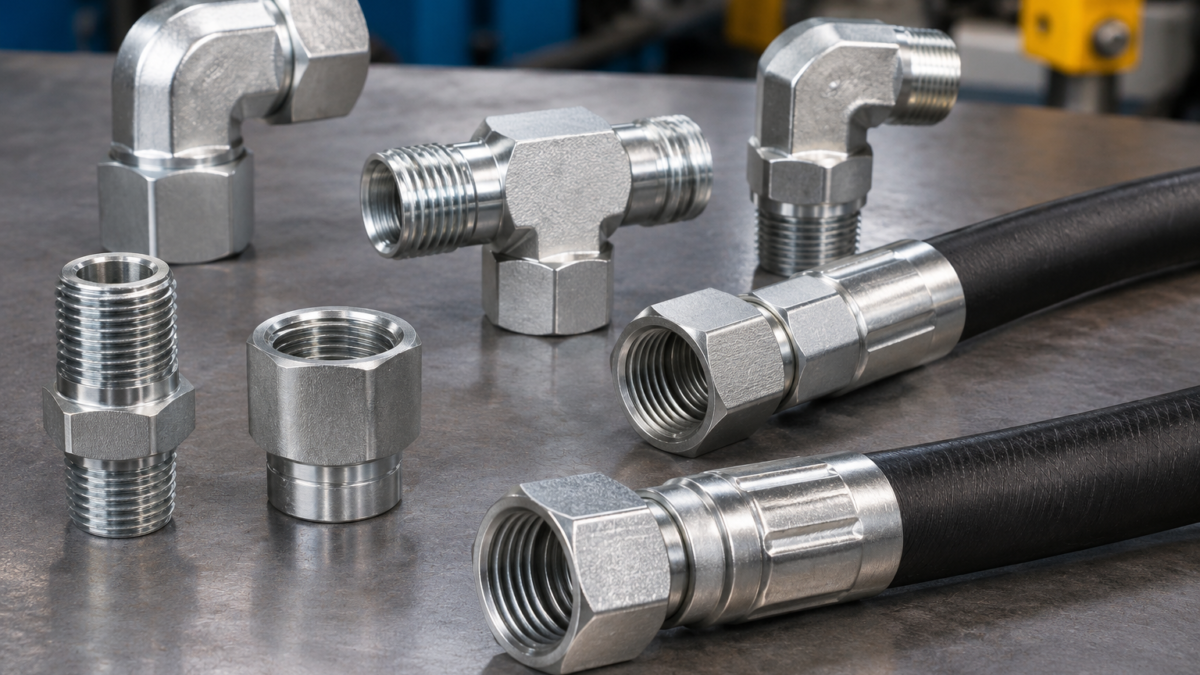
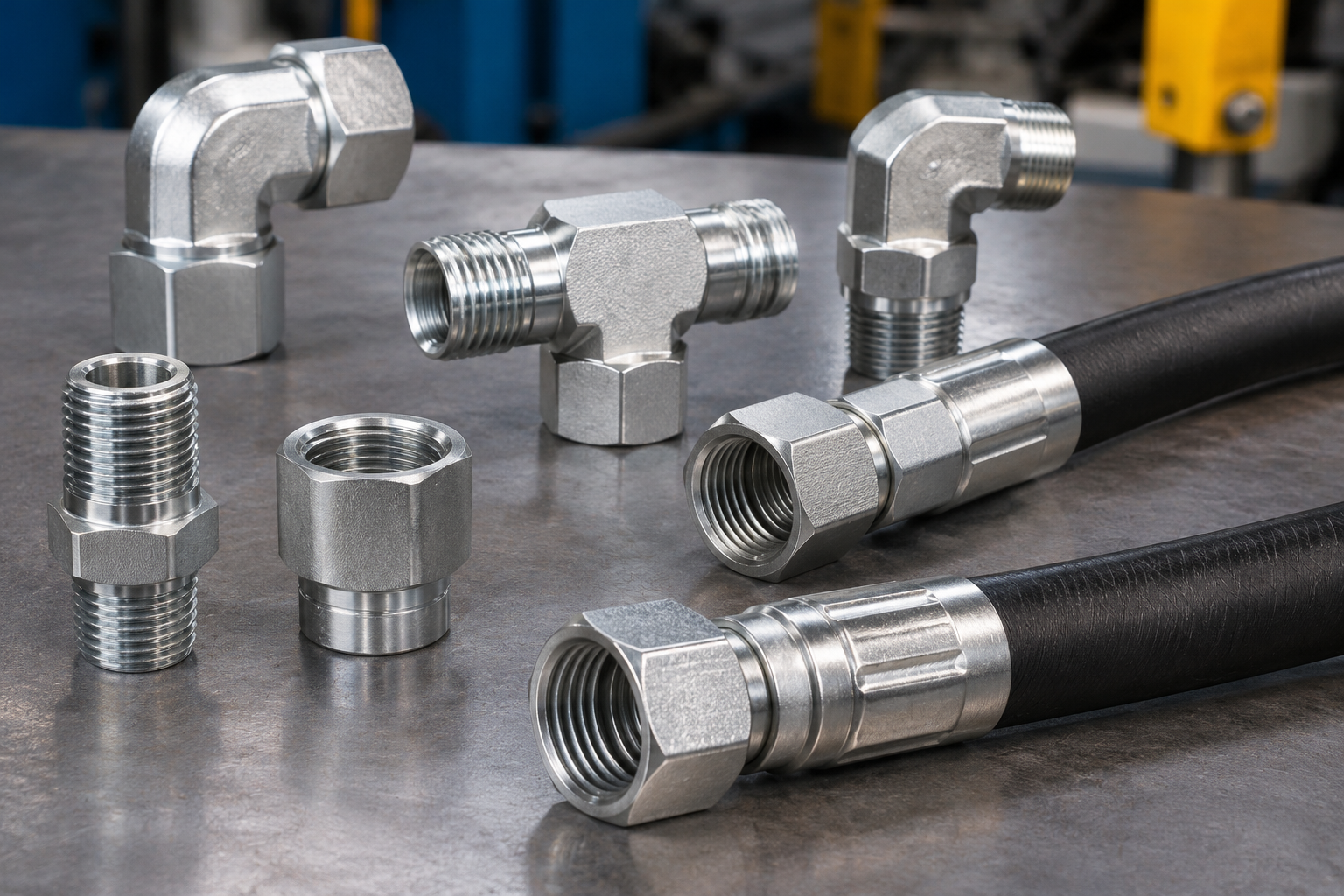
Image: Industrial hydraulic hose assemblies, threaded adapters, and metal connectors. Original illustrative image.
Important Factors When Selecting Hydraulic Fittings
Selecting a fitting involves more than matching its appearance to an existing component. Several technical factors determine whether the connection will operate reliably.
Pressure Rating
Every hydraulic component has a specified maximum working pressure.
The selected fitting must be suitable for the system’s operating pressure, including applicable pressure surges and dynamic loading.
Using an underrated component can result in leakage, mechanical failure, or serious safety hazards.
Thread and Connection Compatibility
Hydraulic systems use different connection standards, including BSP, JIC, ORFS, and metric designs.
These connections are not automatically interchangeable.
For example, two fittings may have similar thread dimensions but use different sealing methods. Combining incompatible designs can damage components or create leaks.
Always verify the thread standard, size, sealing surface, and applicable specifications.
Temperature and Fluid Compatibility
Hydraulic fluid temperature can change considerably during operation.
Fittings and sealing materials must remain compatible with the fluid and temperature range.
For applications involving unusual chemicals or extreme conditions, technical specifications should be reviewed before installation.
Why Proper Installation Matters
Even correctly selected hydraulic components can fail when installed improperly.
A reliable installation begins with inspecting the hose, fitting, and sealing surfaces for visible damage or contamination.
For crimped hose assemblies, technicians must use the specified hose-and-fitting combination, compatible crimping equipment, and approved crimp dimensions.
Threaded connections should be tightened according to manufacturer instructions. Excessive tightening can damage sealing surfaces, while insufficient tightening may allow leakage.
Hoses should also be routed to avoid twisting, sharp bends, abrasion, and unnecessary tension.
After installation, the completed assembly should undergo appropriate inspection and testing before returning to service.
Maintenance Tips for Long-Term Reliability
Regular inspection helps identify hydraulic connection problems before they become serious.
Maintenance personnel should look for corrosion, damaged hoses, loose connections, fluid leakage, and excessive wear.
A useful maintenance programme includes:
-
Inspecting hose assemblies at intervals appropriate to their operating conditions.
-
Checking connections for visible deterioration or movement.
-
Replacing damaged or incompatible components.
-
Keeping hydraulic systems clean during maintenance.
-
Recording recurring failures to identify underlying installation or design problems.
Hydraulic systems must be depressurised and safely isolated before maintenance. Never use bare hands to locate suspected leaks, as pressurised hydraulic fluid can penetrate the skin and cause severe injuries.
Finding Suitable Hydraulic Components with Uberse
For equipment manufacturers, maintenance contractors, and industrial buyers, sourcing compatible components from a dependable supplier is an important part of hydraulic system management.
Uberse provides an online platform for customers researching industrial hydraulic connection products and related equipment requirements.
When comparing available options, buyers should examine product dimensions, material specifications, connection types, pressure ratings, and compatibility with their existing assemblies.
Those looking to compare different options can explore Uberse full product range and identify products relevant to their applications.
Before placing an order, it is advisable to confirm technical specifications, availability, and suitability for the intended equipment.
Careful purchasing decisions can help reduce incorrect orders, installation delays, and unnecessary replacement costs.
Conclusion
Reliable hydraulic systems depend on properly selected, correctly installed, and regularly maintained connections.
From construction equipment to industrial manufacturing machinery, hydraulic fittings perform an essential role in maintaining fluid transfer, system efficiency, and operational safety.
Understanding connection types, material properties, pressure ratings, and compatibility requirements allows businesses to make better purchasing decisions and reduce preventable failures.
By combining quality components with appropriate installation procedures and routine maintenance, equipment operators can improve hydraulic system reliability, minimise downtime, and support long-term industrial performance.
How to Choose Reliable Hydraulic Hose Fittings for Industrial Applications