

The material in your spoiler started life in a light bulb. Really.
Carbon fiber feels like a material from the future, so its actual biography comes as a surprise: it is older than the interstate highway system, older than the jet airliner, older, in one sense, than the electric light grid it once served. The road from Victorian laboratories to your neighbor’s carbon hood is one of the stranger stories in materials science, and it explains a lot about why the stuff costs what it costs.
The Light Bulb Chapter
The story opens, improbably, with Thomas Edison. In 1879, his team carbonized bamboo and cotton threads into filaments for early light bulbs. Baking plant fiber until only carbon remained. These were the first carbon fibers, weak and crude by any modern measure, but the core idea was already there: take something organic, burn away everything that is not carbon, and keep what survives. Then the tungsten filament arrived, carbon lost its job, and the idea slept for the better part of a century.
The Cold War Wakes It Up
The modern material was born in the late 1950s and 1960s, when aerospace and military programs went hunting for materials that were strong, stiff, and light in ways metals could not be. Researchers in the US, UK, and Japan converged on a better starting material: PAN, a synthetic polymer fiber that carbonizes into something genuinely useful. By the mid-1960s the process was producing fibers with a real fraction of steel’s strength at a fifth of the weight. Missiles and military jets got it first, as they always do. The carbon fiber material guide covers what the modern version of that process produces today.
Racing Finds It
Formula 1 changed everything in 1981, when McLaren rolled out the first carbon fiber monocoque chassis. The paddock was skeptical, a car made of baked plastic?, right up until carbon cars started winning everything and, more importantly, protecting drivers in crashes that would have been fatal in aluminum. John Watson walked away from a huge Monza shunt that year in the McLaren, and the argument was over. Within a decade, carbon was the mandatory language of top-level racing, and every material decision in motorsport has been made in its shadow since.
The Consumer Wave
Between the supercars and today’s aftermarket came the wave that made carbon fiber a household word: sports equipment. Tennis rackets in the 1980s, then bicycle frames, golf shafts, fishing rods, skis. These products did something the race cars could not. They put the material in millions of ordinary hands. Cyclists learned that carbon frames were light, stiff, and strangely comfortable. That consumer education is why a car buyer today recognizes the weave instantly and trusts it intuitively. The sports world spent forty years marketing the material on the automotive industry’s behalf, one racket at a time.
The Road-Car Trickle-Down
Supercars came next: limited-run exotics in the 1990s and 2000s wore carbon tubs and panels as proof of seriousness, at prices that kept the material exotic. The McLaren F1 put a carbon monocoque on the road in 1992; a decade later, cars like the Ferrari Enzo and Porsche Carrera GT made the carbon tub the defining supercar signature. Then manufacturing matured. Layup techniques improved, cycle times dropped, and suppliers learned to make smaller parts economically. The carbon hood, spoiler, and mirror cap went from unobtainium to catalog items.
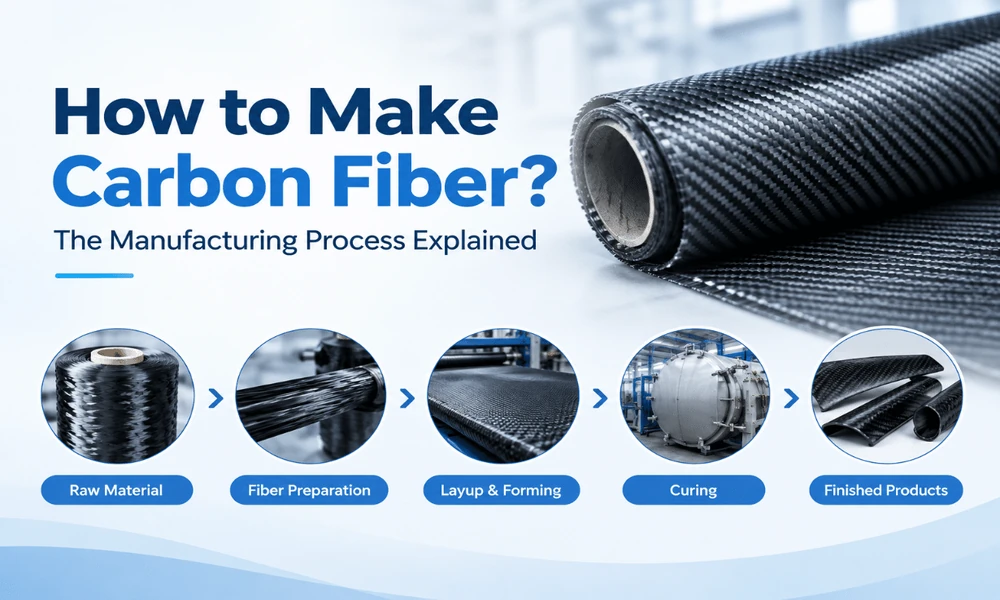
Today’s aftermarket, including the manufacturing pipeline described in the carbon fiber fabrication walkthrough, is the direct descendant of those F1 autoclaves, democratized. The same physics that protected Watson at Monza now protects a spoiler on a street car, at a price a dedicated enthusiast can reach. Few technologies have traveled that distance that fast.
Why the History Explains the Price
Notice what this story is not: a tale of a material that got cheap. Carbon fiber got accessible, not inexpensive, because the process resists the usual mass-production shortcuts. The ovens still run hot, the layup still wants skilled hands, the autoclaves still cost fortunes. Every price tag in the catalog carries a little of that history. The space race, the F1 paddock, the decades of process refinement that turned a light bulb filament into a chassis.
The history explains the culture too. Materials with a century-long head start accumulate infrastructure; materials with racing pedigree accumulate mythology. Carbon fiber now has both the myth and the mileage, which is why its community knows the difference between a real autoclave part and a sticker. Communities that learn a material’s history become very hard to fool.
The Chapter Being Written Now
The story is not finished. Recycled carbon fiber is moving from experiment to product. Natural fiber hybrids like flax composites are racing in professional series right now. Forged carbon processes are making complex shapes economical. The material that started in a light bulb keeps finding new jobs. And the next time someone calls it a modern invention, you will know it has been reinventing itself for a hundred and forty years.
From Light Bulbs to Supercars: the Strange History of Carbon Fiber