
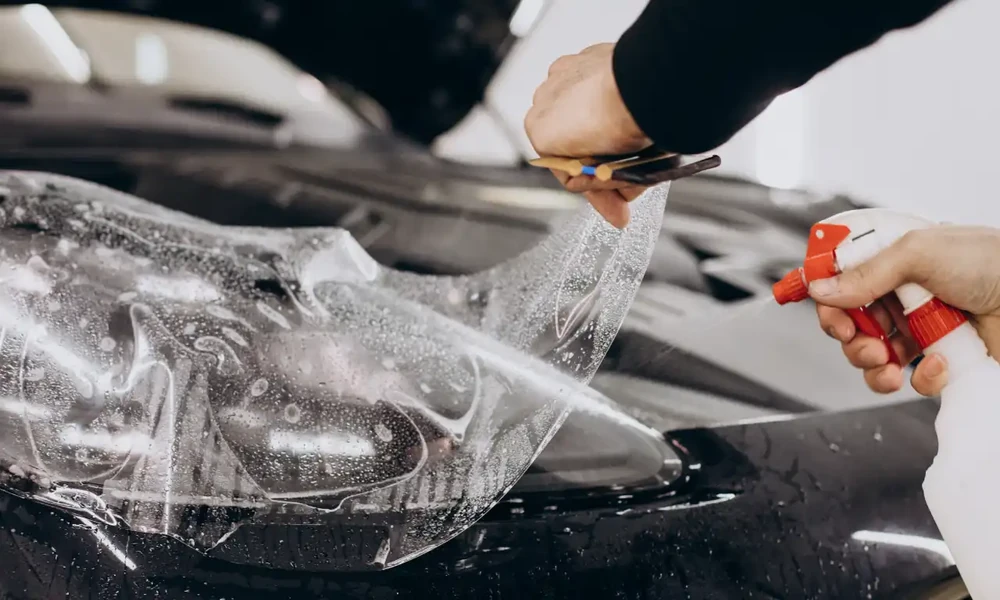

By the time a roll of protection film reaches a detailing shop, it looks deceptively simple: a clear or coloured sheet on a backing liner, wound around a cardboard core. It is easy to forget that this thin material has to do several difficult things at once. It must stretch without tearing, stick without damaging paint, stay clear for years in harsh sunlight and resist scratches, stains and stone impacts.
Achieving all of that depends on what happens long before installation. Understanding the basic production steps helps installers and buyers ask better questions and recognise why some films behave so differently from others.
It Starts With the Raw Material
Most modern protection films are based on thermoplastic polyurethane, usually shortened to TPU. It arrives at a production facility in the form of small pellets or granules.
The choice of TPU grade is one of the most important decisions a producer makes. Different grades have different levels of clarity, flexibility, resistance to yellowing and strength. Additives, such as UV stabilisers, are often blended in to help the finished film resist discolouration from sunlight.
A ppf factory focused on quality will source raw material carefully and test incoming batches, because small variations at this stage can show up as haze, yellowing or uneven thickness later.
Turning Pellets Into Film
The pellets are melted and formed into a continuous sheet. This is commonly done through extrusion or casting processes, where molten material is spread to a precise thickness and cooled in a controlled way.
Thickness control is critical. Protection films are typically measured in mils or microns, and even small variations across the width of a sheet can affect how the film stretches and how it looks on a car. Uneven film can show visible distortion, particularly on dark paint or under bright lights.
Cooling also matters. If the film cools too quickly or unevenly, internal stresses can develop. These can cause the film to behave unpredictably during installation, shrinking back from edges or showing ripples.
The Adhesive Layer
Once the base film is formed, an adhesive layer is applied to one side. This is usually a pressure-sensitive adhesive, meaning it bonds when pressure is applied rather than requiring heat or chemical activation.
The adhesive has a complicated job. It must be optically clear so it does not cloud the paint underneath. It must allow installers to slide and reposition film during application, especially when using slip solutions. It must then bond securely for years through temperature swings, rain and washing. And when the time comes, it must release cleanly without lifting paint or leaving heavy residue.
A release liner is laminated over the adhesive to protect it until installation.
The Top Coat: Where Much of the Performance Lives
The opposite side of the film receives a top coat. This thin layer has a major influence on how the film behaves in daily use.
Self-healing properties
Many top coats are designed so that fine scratches can soften and recover with heat. This is achieved through the chemistry of the coating, which allows surface marks to level out when warmed.
Stain and chemical resistance
The top coat also determines how well the film resists bird droppings, insect residue, fuel and cleaning chemicals.
Finish and water behaviour
Gloss, satin and matte finishes are largely defined by the top coat. Some films also include water-repellent properties in this layer.
Adding Colour
For coloured films, a pigmented layer is incorporated during production. The challenge is achieving consistent colour across the full width and length of each roll, and between different production runs. Colour variation that might go unnoticed on a small sample becomes obvious when adjacent panels on a car come from different rolls.
Curing and Conditioning
After coating and lamination, the film typically goes through curing or conditioning steps that allow coatings and adhesives to stabilise. Rushing this stage can affect adhesion and top coat performance.
Quality Testing
Before rolls are released, responsible producers test samples from production runs. Common checks include thickness measurements, optical clarity and haze, adhesion strength, elongation and tensile strength, and resistance to heat, UV exposure and chemicals.
Accelerated weathering tests expose samples to intense UV light and heat cycles to simulate long-term outdoor use. These tests help predict how a film will age, though they are not a perfect substitute for years of real-world experience.
Why Consistency Is the Hardest Part
Making one excellent roll is not the real challenge. Making thousands of rolls that behave the same way is. Raw material batches vary slightly, environmental conditions in the facility change with the seasons and equipment wears over time. Good producers monitor these variables and adjust their process so that a roll shipped in winter performs like one shipped in summer. For installers, that consistency is often more valuable than any single headline feature.
Slitting, Winding and Packaging
Large master rolls are cut, or slit, into the widths used by installers. Edges need to be clean and straight, because rough edges can cause problems during installation.
The film is then wound onto cores with consistent tension. Too loose, and the roll can shift. Too tight, and pressure marks may form. Rolls are wrapped and boxed to protect the surface and adhesive during shipping and storage.
What This Means for Buyers and Installers
Knowing the basic steps makes it easier to evaluate suppliers. Ask what grade of material is used, how thickness is controlled, how the top coat performs and what testing is done before shipment. Ask whether testing is carried out in-house, by external laboratories or both.
Producers who can answer these questions clearly usually have genuine control over their process. Those who cannot may be relying on outsourced material with less oversight.
A Thin Product With a Lot Behind It
Paint protection film may be thin, but it represents a careful balance of material science and manufacturing precision. Every property installers rely on, from stretch and clarity to clean removal years later, is decided at the production stage.
The next time a roll is unboxed in a workshop, it is worth remembering how many steps it took to get there, and how much those steps influence the result on a customer’s car.
Inside a PPF Factory: How Paint Protection Film Is Made