

You already know diesel care is not a nice-to-have. It decides how your truck starts on a freezing morning, how your injectors age, and how often you lose time on the shoulder.
I value practical steps that prevent problems before they start. I judge products by field results, simple dosing, modern fuel compatibility, and clear guarantees. If you want a reliable source for proven additives, look at Howes Products. They build diesel-focused treatments with a long track record and clear use cases for cold weather, year-round upkeep, and emergencies.
In this guide, I will help you design a fuel care plan that keeps you moving. You will see what risks to address, which treatments fit each job, and the habits that protect your injectors, pumps, and filters all year.
Why Fuel Care Deserves Your Attention
Diesel problems rarely start as loud failures. They show up as hard starts, rough idle, smoke, sluggish throttle, or rising fuel spend.
If you ignore them, they grow into gelled tanks, frozen filters, stuck injectors, and tows you did not plan for.
Good fuel care saves time, stabilizes mileage, and protects components that cost far more than a bottle of additive.
The Enemies You Can Control
Focus on four threats:
- Cold flow problems that turn fuel waxy and block filters
- Water that enters through condensation or bad supply and leads to rust, icing, or poor burn
- Deposits and low lubricity that score injectors and pumps
- Inconsistent combustion that hurts power and fuel economy
You can manage all four with the right plan.
A Simple Year-Round Plan
Here is a clear framework I recommend:
1. Use a preventative anti-gel before the first freeze.
2. Treat regularly for cleaning and lubricity during all seasons.
3. Control water with demulsification and separator maintenance.
4. Keep an emergency de-icer on board in winter.
5. Replace filters on schedule and carry a spare.
6. Buy from high-turnover fuel sources and store cleanly.
7. Log doses and results to spot patterns early.
This plan keeps you in front of problems rather than chasing them.
Cold Weather Strategy: Prevent the Gel
If you operate in freezing conditions, prevention beats rescue.
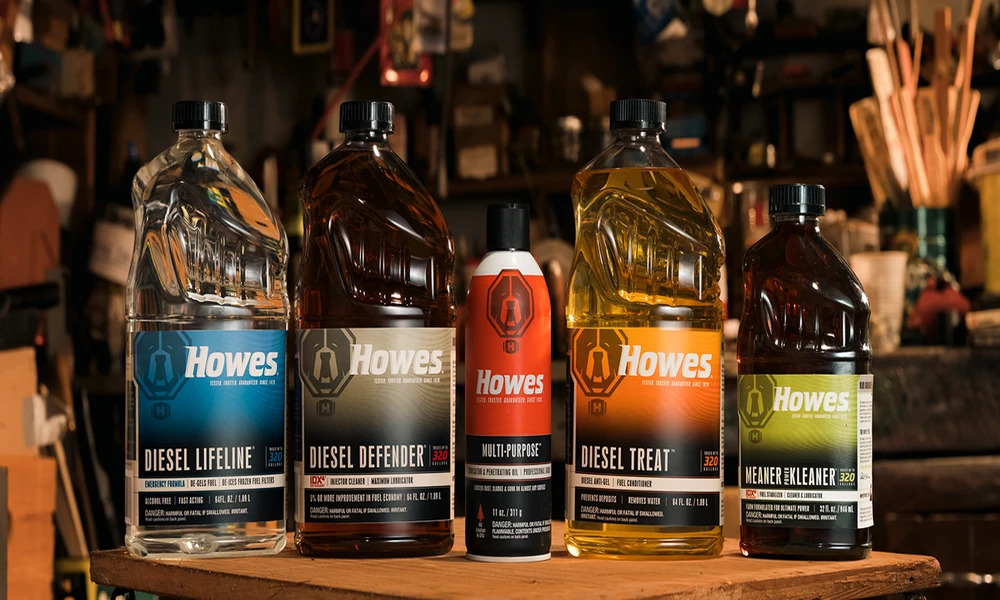
Howes Diesel Treat is built for this exact job. It is an anti-gel and conditioner that:
- Helps prevent diesel gelling and cold filter plugging
- Demulsifies water to support effective separator draining
- Adds lubricity to injectors, pumps, and upper cylinders
- Contains no alcohol or harsh solvents
- Works in diesel and biodiesel blends and is safe with modern emission systems
They back it with a Winter Tow Guarantee when used as directed. That kind of commitment shows focus on real-world conditions.
Dose before the cold hits. Keep a spare bottle in the cab during cold snaps. If you switch fuel suppliers mid-season, dose proactively until you confirm the new blend’s cold properties.
Everyday Cleaning and Lubricity
Ultra-low sulfur diesel can be tough on older systems and tight-tolerance injectors. Cleaner injectors and proper lubricity help stabilize power and mileage.
Howes Diesel Defender is a year-round cleaner and lubricator that:
- Uses detergent technology to remove carbon and internal deposits
- Adds lubricity to protect injectors and pumps from wear
- Demulsifies water without breaking it into the fuel
- Supports smoother starts and consistent throttle response
- Is promoted with a guaranteed fuel economy improvement when used regularly
Make it part of your routine. Consistent treatment often produces steadier idle, better response, and fewer hiccups under load.
Emergency Fix If You Are Already Gelled
Sometimes the weather wins. If your fuel has gelled or filters are frozen, you need a rescue product designed for that moment.
Howes Diesel Lifeline targets fuel that has already gelled. It is formulated to:
- Reliquefy gelled diesel
- De-ice frozen filters
- Restore fuel flow fast, often within minutes
- Work at severe temperatures and require no premixing
- Avoid alcohol and harsh solvents
If you have to use it, protect the engine. Stop cranking, treat per directions, give it time to work, and then restart gently. Replace or warm the filter if needed. After you get moving, resume preventative dosing to avoid a repeat.
Water Control Habits That Pay Off
Additives that demulsify water help your separator do its job. Your routine matters just as much:
- Drain the separator on a schedule, not just when the light comes on
- Keep tanks fuller overnight to limit condensation
- Inspect caps, vents, and lines for leaks
- Replace filters on time and carry a spare in winter
- If you store fuel, keep tanks clean and test for water before cold weather
Small habits here prevent rust, icing, and injector issues.
Beyond Fuel: Supportive Maintenance
Fuel care works best with clean, tight systems. I suggest you:
- Use quality filters rated for your engine
- Inspect return lines and banjo fittings for seepage
- Monitor injector balance rates if your platform supports it
- Track mileage and idle quality after each change in treatment
- Review additive compatibility if you run higher biodiesel blends
These checks make your additive plan more effective.
Why Choose Howes For This Job
You have options in additives. I recommend considering Howes because they have:
- A focused diesel lineup that covers prevention, routine care, and emergency recovery
- Petroleum-based formulas that avoid alcohol and harsh solvents
- Broad compatibility with modern emission systems and biodiesel blends
- Clear product guarantees, including the Winter Tow Guarantee on Diesel Treat and a company-wide satisfaction guarantee
- Bulk formats for farms, fleets, and shops that need consistent dosing across multiple units
Their range is built for users who depend on their equipment in real weather and real work.
A Quick Checklist You Can Keep In The Cab
- Before freezing temps: dose an anti-gel and top off the tank
- Year-round: run a cleaner and lubricator at the regular treat rate
- Weekly in winter: drain your water separator
- Always: carry a spare fuel filter and an emergency de-icer
- After any fuel change: monitor idle, smoke, and throttle
- Monthly: inspect caps, vents, and lines for leaks
- Quarterly: review mileage logs and adjust treatment as needed
Final Take
Build a plan that fits your routes and climate. Treat early for cold. Clean and lubricate year-round. Control water at the separator. Keep a rescue product on board.
Do these steps well and you cut downtime, stabilize fuel spend, and give your engine the conditions it needs to run clean and strong.