
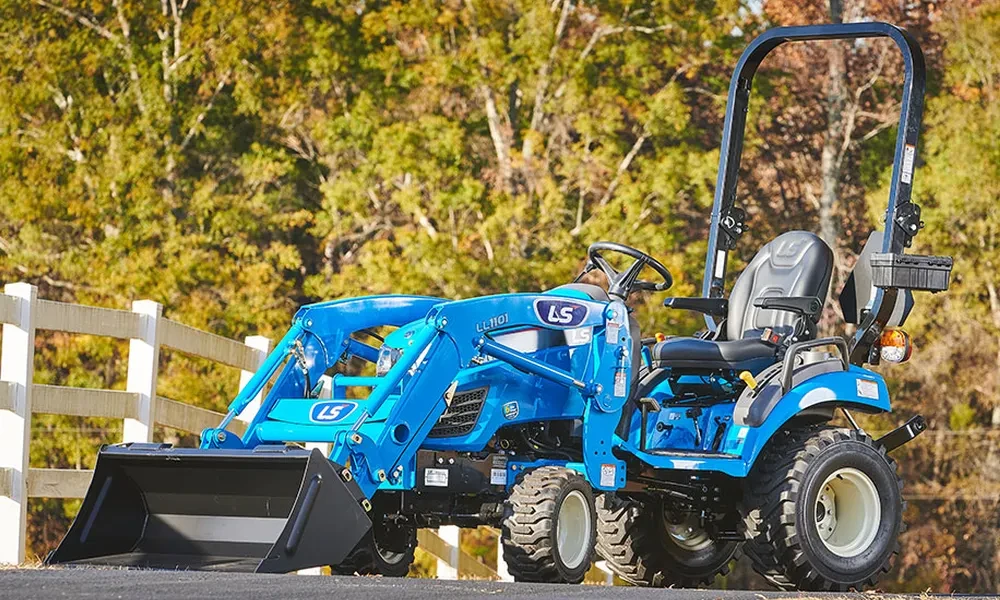

Homeowners, small landowners, gardeners and property managers will find a subcompact tractor an investment worth making if they require more power than a handheld tractor. These small units can help with mowing, cleaning, landscaping, and light digging, as well as transporting or similar property maintenance-related jobs. But there are some factors that need to be taken into account when selecting the right model.
Before making a final choice, it is also useful to understand how a subcompact tractor fits into your overall property maintenance routine. Looking at Subcompact Tractor Know can help you better understand the capabilities, practical uses and important features of these compact machines before comparing individual models. This broader perspective can make it easier to match the tractor’s size, power and attachments with the tasks you expect to handle regularly, while avoiding features or costs that may not provide much value for your needs.
Know what you have to do.
Build a list of types of jobs the tractor should be able to do. One machine designed primarily for mowing might be different in features from one used primarily for moving soil, brush removal or material handling. It is helpful to make a list of regular and occasional chores to establish the needed size, capacity, attachments and horsepower.
Consider Tractor Size
Subcompact tractors are intended to offer equivalent power to a larger tractor, whilst being comparatively compact and easy to operate. The small size of their dimensions may be useful when working around gardens, buildings, fences and narrow pathways. Larger isn’t always better though. When purchasing a tractor, consider those that have the ability to manoeuvre through your property without hurting lawns and garden beds or other sensitive areas.
Check Engine Power
Although horsepower is a highly significant factor, it’s not the most important one. Check the engine power of the tractor compared to the work to be done. More weight-lifting or some attachments might demand more power. A suitable model can be used for the equipment more efficiently and won’t be unnecessarily large, bulky or costly.
Evaluate Attachments
A key benefit of the subcompact tractor is that it can be equipped with various attachments. These can include mower decks, tillers, rear blades and front loaders, among others. Determine if the attachments will fit the tractor and if they are easily installed and removed. The attachments that you select can make the machine much more versatile.
Consider Lift Capacity
When moving soil, mulch, gravel, firewood or other material, pay careful attention to the capacity of the loaders. Tractors must be able to manoeuvre and carry the loads with which you will be working. Take into account the capacity of rear implements, as well as tractor stability when transporting equipment or materials.
Don’t forget to review Comfort and Controls.
Operating a tractor often requires a lot of repetitive work so operator comfort is important. Check for easy-access controls, visibility for driving, an adjustable seat and convenient entry and exit. The type of transmission should also be aligned with your tastes and uses.
Consider servicing and maintenance
If you want your tractor to perform well, it’s critical that you perform routine maintenance. When purchasing, take into account components, services, and warranty, and look for local experts. Simple maintenance can lead to higher convenience during the machine’s service life.
Compare Total Costs
The purchase price is just one factor. Take into account attachments, fuel, repairs, maintenance and storage requirements. A comparison of the total cost of ownership may be helpful when selecting a tractor for the property and budget.
Conclusion
There is more to consider than horsepower and cost when picking a subcompact tractor. Knowing what you need to do, measuring dimensions and attachments, assessing lifting ability, comfort and maintenance.