
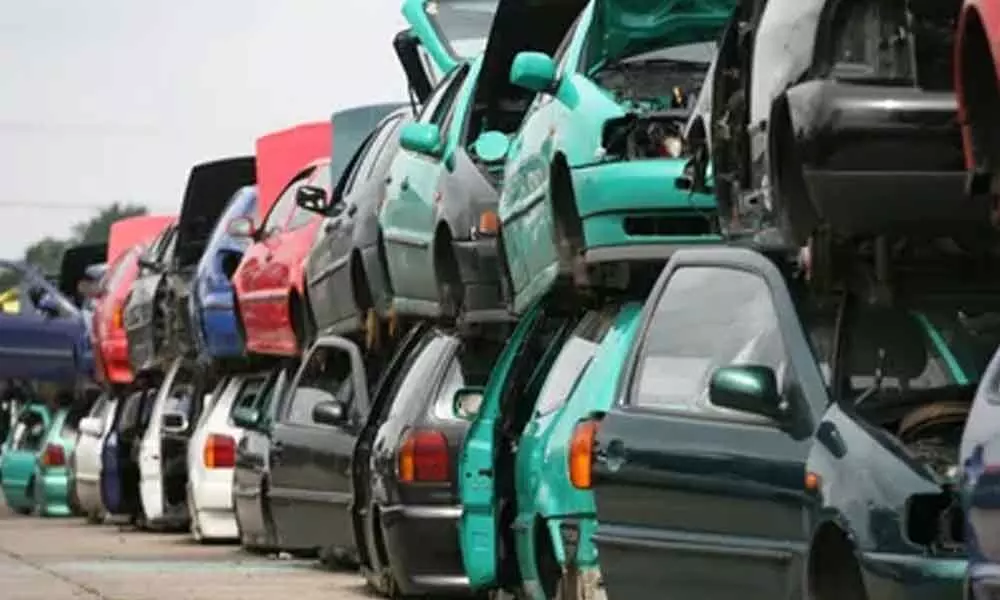

Car scrap in Singapore operates within a regulatory framework that appears neutral on its surface, yet the practical burdens of compliance fall unevenly across different segments of society, revealing how even well-intentioned policies can create disparate impacts based on economic class and social capital. In a city-state where vehicle ownership already represents one of the world’s most expensive propositions, the process of disposing of that vehicle at the end of its mandated lifecycle presents a final test of whether you possess the knowledge, resources, and flexibility to navigate bureaucratic requirements successfully.
The Regulatory Burden and Its Distribution
Every vehicle owner in Singapore eventually confronts the Land Transport Authority’s deregistration requirement. The LTA states explicitly that “Once your vehicle is deregistered, it can no longer be kept or used in Singapore.” This regulation applies uniformly to all owners, yet its practical implementation creates friction points that affect different populations differently. Singaporean citizens and permanent residents must present original National Registration Identity Cards. Foreign workers need Ministry of Manpower or Immigration and Checkpoints Authority passes. For workers whose employment status may be transitioning or whose documentation has complications, these requirements create obstacles.
The OneMotoring digital platform, accessible through Singpass authentication, streamlines the process for digitally literate users. But digital literacy itself follows class lines. Older vehicle owners, lower-income workers with limited technology access, and foreign workers unfamiliar with Singapore’s digital government systems face steeper learning curves. The alternative, visiting an LTA Customer Service Centre in person, requires taking time off work. For hourly workers who lose income when absent, for taxi drivers who earn only while driving, the cost of compliance starts accumulating before the actual disposal process begins.
The Economics of Disposal
The financial calculation when you scrap a car in Singapore involves three components. The Certificate of Entitlement rebate returns unused certificate time through daily proration. The Preferential Additional Registration Fee rebate, available only for vehicles under ten years old, refunds a percentage of the additional registration fee originally paid. The scrapyard body value compensates for metal and salvageable parts.
The PARF rebate structure creates a declining scale that financially penalises longer vehicle retention:
- Vehicles under five years old receive 75% of the original Additional Registration Fee
- Vehicles five to eight years old receive 50%
- Vehicles eight to ten years old receive 25%
- Vehicles over ten years old receive nothing
This structure serves policy goals of maintaining a young vehicle fleet with better emissions profiles. But consider its distributional effects. Wealthy households cycle through vehicles frequently, capturing maximum PARF rebates. Lower-income households, stretching vehicle ownership as long as economically feasible, hold vehicles past the ten-year threshold where PARF eligibility disappears entirely. The rebate structure thus transfers money upward, subsidising frequent replacement by those who can afford it while providing nothing to those who cannot.
The Eight-Day Window and Economic Vulnerability
After deregistration authorisation, vehicle owners have eight calendar days to deliver their vehicle to an LTA-appointed scrapyard. This inflexible deadline assumes certain baseline capabilities. It assumes you can take time off work. It assumes you have access to transport networks to move a vehicle that cannot legally be driven.
For professionals with personal leave and social networks to help transport the vehicle, eight days suffices. For shift workers with unpredictable schedules, for foreign workers without extensive social networks, for elderly owners with mobility limitations, the eight-day window compresses into a source of stress and potential non-compliance.
When the System Fails You
The penalties for non-compliance reveal how regulatory systems can transform confusion into criminalisation. The Land Transport Authority warns that failure to submit disposal proof within one month can result in prosecution with “a maximum fine of $2,000 or 3 months’ imprisonment.” Repeat violations carry penalties up to $5,000 or six months imprisonment. These consequences fall most heavily on those with the least capacity to navigate the system successfully. Wealthy vehicle owners hire services to manage the entire process, converting complexity into a simple transaction. Lower-income owners must manage it themselves, bearing all the risk of mistakes.
Market Forces and Unequal Returns
The scrapyard body value, determined by market forces rather than regulation, introduces additional variability:
- International metal prices fluctuate based on global commodity markets
- Parts demand varies by vehicle popularity and model
- Condition assessments depend on scrapyard evaluation practices
- Owner negotiating leverage varies with knowledge and alternatives
Vehicle owners with knowledge of current market rates, with time to obtain multiple quotes, with transportation flexibility to choose between scrapyards, can optimise their returns. Those without such advantages accept whatever their nearest scrapyard offers.
The Timing Trap
Certificate of Entitlement rebates decline daily as expiry approaches. This creates pressure for early action. But early disposal means losing remaining usable time with your vehicle. For households with alternative transport options, this trade-off is manageable. For households where the vehicle represents essential access to work, childcare, or elderly parent care, the calculation becomes painful. Wait too long and you sacrifice rebate value. Act too early and you lose mobility you cannot easily replace.
Inequality Built Into Process
Successfully managing vehicle scrapping in Singapore requires information, flexibility, social capital, and economic cushion. These resources distribute unevenly across society. The result is a system where regulatory compliance itself becomes more expensive for those with fewer resources, where the same rules impose different real costs depending on your social position, and where outcomes reflect not just the vehicle you own but the life circumstances you navigate when car scrap in Singapore becomes your necessary task.